Skip to content

Infinite Images:
The Art of Algorithms

Decoding Generative Art

Julia Kaganskiy, curator of Infinite Images: The Art of Algorithms

Since the dawn of the modern computing era in the mid-twentieth century, artists have worked alongside engineers (and, in fact, often as engineers themselves) to investigate the potential of computational tools and their impact on creativity, culture, and the human experience writ large. At the heart of this pursuit has been a sustained study and engagement with algorithms, generative systems, and automation as both the materials and animating forces that have come to define not just the art of this era, but the cybernetic logic and values that have embedded themselves so deeply into how society understands itself. 

Today, in 2025, our world is profoundly shaped by algorithmic decision-making and, increasingly, by media generated with artificial intelligence (AI). From our social media feeds to the workplace, from the doctor’s office to the supermarket, there are few areas of our daily lives that remain untouched by algorithmic systems and automation. While this may feel like a new phenomenon of the digital age, the trajectories that set these developments in motion follow a long arc that extends at least as far back as the Industrial Revolution. Despite the impact of these systems on our lives and livelihoods, for many of us they still feel foreign and obscure. They’re hidden beneath the sleek frictionless design of software and apps, masked by technical know-how and expertise, and often simply inaccessible due to proprietary corporate policies. While the complexity of our rapidly evolving digital environment can be hard to parse even for the most tech savvy among us, a rudimentary understanding of algorithms, generative systems, and automation can provide some firm ground on which to orient oneself amid the shifting tides of change.  

Against this backdrop, the exhibition Infinite Images: The Art of Algorithms examines how artists working with generative systems, both analog and digital, have historically negotiated chance and control, emergence and intention, and authorship with automation. Many defining aspects of the so-called “generative art” that is the subject of this exhibition are not inherently novel or even inherently digital, yet they offer much in the way of deepening our understanding and appreciation of how humans design and deploy systems, and how these systems then take on a productive power of their own. Through an in-depth and expansive consideration of how artists work with generative processes, the exhibition sheds light on contemporary questions regarding authorship, creativity, and the role of human agency in an increasingly automated world.

What is Generative Art?

“Generative art” can be tricky to define because it describes a process or technique that can be applied in many different ways. It has also evolved over time with the development of new technologies such as blockchain and AI. Broadly speaking, generative art is art that is created, in whole or in part, using an autonomous system. This autonomous system could be another person or group of people carrying out a set of instructions, a computer executing an algorithmic program, or even a chemical or biological process, such as a work that is grown rather than fabricated. In generative art, the artist designs the plan that will create the work. Each plan contains within it a range of possibilities—some encompassing a finite number of variations, some infinite. What the artist creates is a system that can operate independently and unfold in ways that yield many different results, including ones that the artist never even imagined or predicted. This element of surprise and discovery is part of what makes generative art an exciting and compelling method for many artists. It allows them to reach beyond the limitations of their own taste, biases, or learned conventions to arrive at previously unthought-of creative ideas that, in turn, add to and expand their visual and conceptual vocabulary. 

This essay explores some of the defining characteristics of generative art that apply across a range of media, from the analog to the digital. 

Algorithms

At the heart of a generative artwork is an algorithm that outlines the step-by-step instructions defining the work and its fundamental structure. We can think of an algorithm as analogous to a recipe or a musical score—it may be originally composed by one person and executed by another, leaving room for interpretation and variation. 

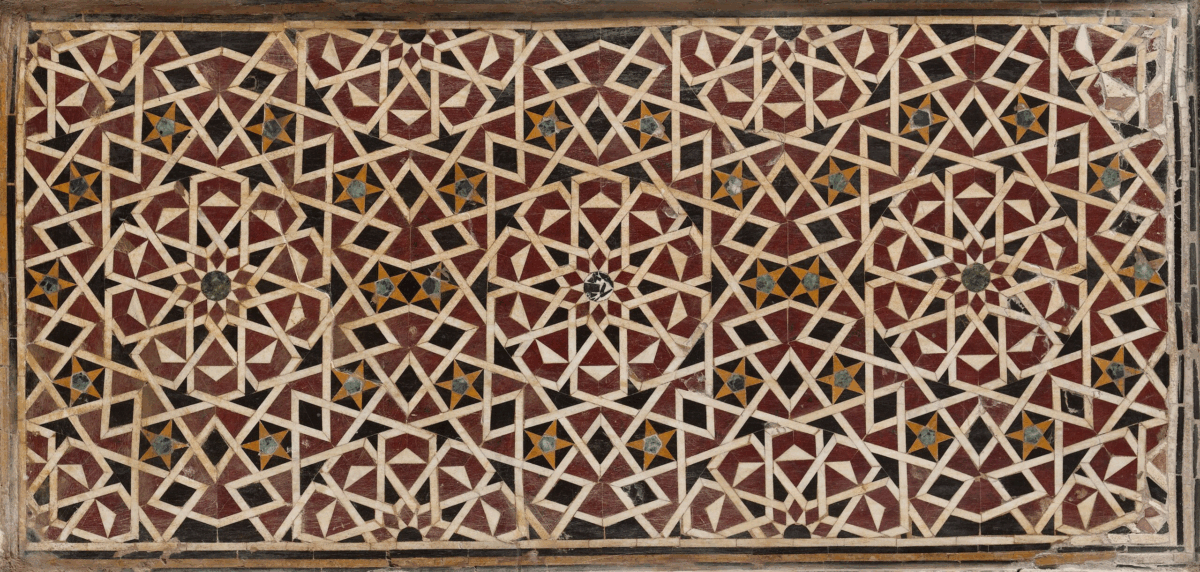
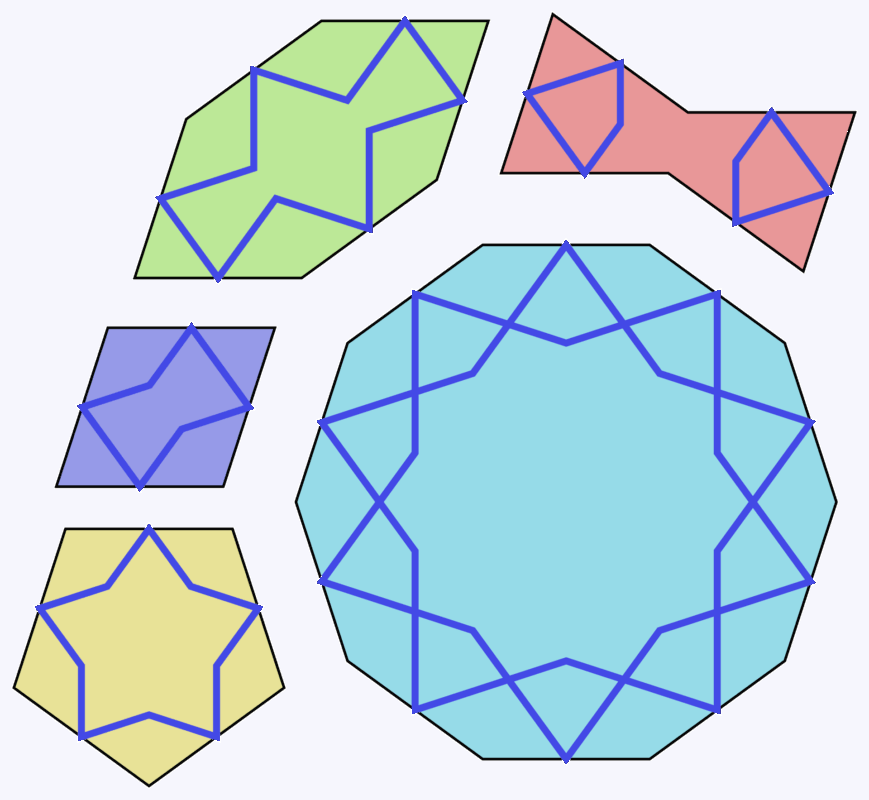
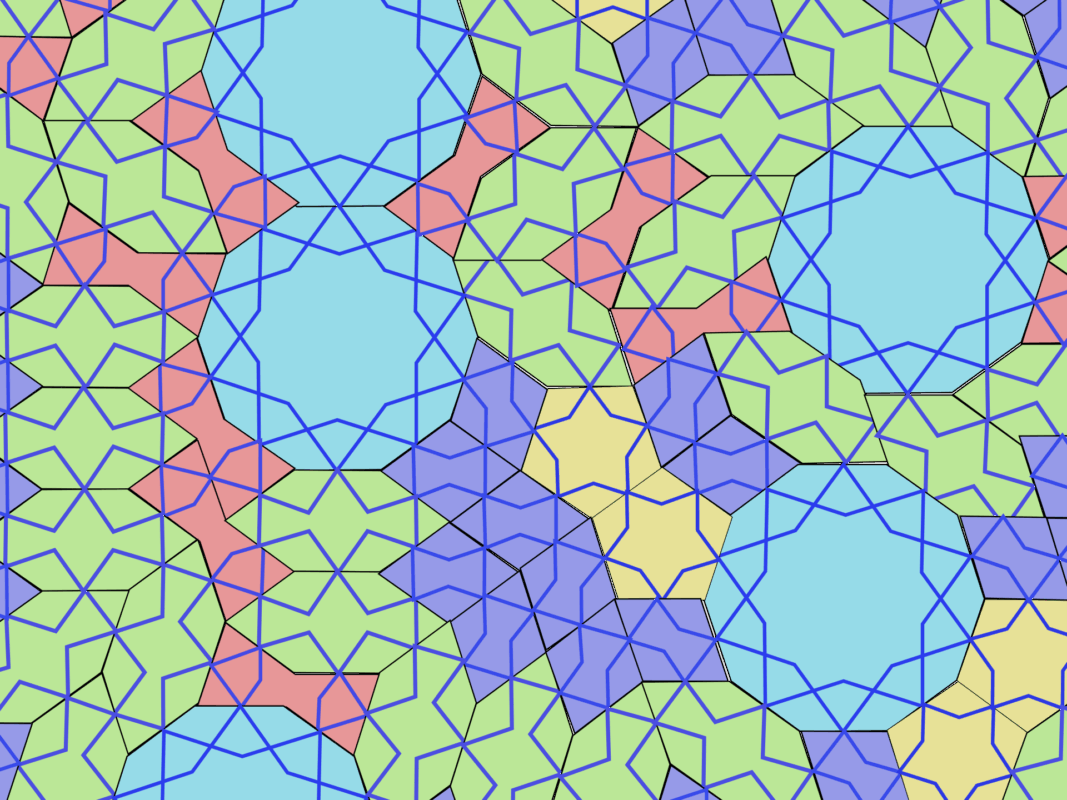
The algorithm itself was invented in the ninth century by a Persian mathematician named Muhammad ibn Musa al-Khwarizmi, known as the “Father of Algebra”. Al-Khwarizmi devised the algorithm as a logical, structured method for problem-solving. His contribution became a foundational principle that would go on to profoundly shape science, technology, and art. It is probably no coincidence, therefore, that many scholars cite Islamic girih tile mosaics as one of the earliest examples of generative art. The geometric girih design represents a toolkit for generating large numbers of distinctive and complex tessellated patterns formed from a set of five equilateral polygon shapes—pentagons, decagons, rhombi, bowties, and irregular hexagons. This pre-defined set of geometric patterns has been used by artisans since the late twelfth century to design the intricate strapwork decoration commonly found in Islamic architecture.
The use of mathematic principles in art did not start with the algorithm and has an even longer history, dating back at least to ancient Greece. Artists have long embedded calculation, such as of proportions or perspective, into their work. However, in the twentieth century, mathematics became the method and subject of artistic experimentation for the first time. Artists began exploring how simple geometric shapes and mathematic principles could form the basis for a new theory of aesthetics. Influenced by developments in science, industry, technology, and radical egalitarian politics that sought to create a more democratic art, many of the avant-garde movements of the early twentieth century—including Russian Constructivism, German Bauhaus, Dutch De Stijl, and Concrete art —celebrated logic, order, and a rational, “objective” approach to art and design rooted in mathematics and rule-based systems. 

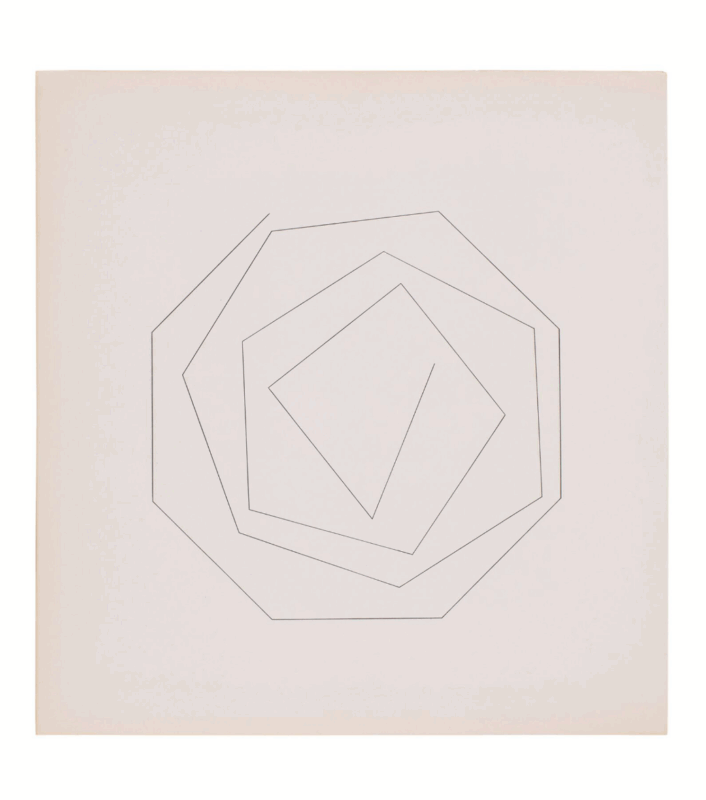
Some artists, such as Vera Molnár and Max Bill (both featured in Infinite Images), went so far as to pursue a scientifically informed theory of aesthetics founded on mathematics and the study of perception. This stemmed from a rejection of the Romantic notion of singular “artistic genius,” in the pursuit of a more rational, universal approach to artmaking and appreciation. Molnár employed an experimental, trial-and-error method in her work, which allowed her to systematically alter one element at a time and then evaluate its impact on the overall composition. She used this method whether working by hand or with a computer, an algorithmic process that followed a simple step-by-step procedure but could generate a whole universe of possibilities. 
Generative Systems

We can also think of algorithms as describing generative systems—a set of rules that outlines how different elements interrelate and interact to form a unified, complex whole. One of the ways in which generative art constitutes a radical departure from traditional painting or sculpture is that it is more concerned with process than product. In generative art, the artist creates a system, a sequence of operations that unfold over time to produce something new. The essence of the creative act—where the artist makes decisions and expresses their intent—lies in the design of the system rather than any singular output. 

In the years following the Second World War, artists began engaging with systems formally and conceptually, influenced by theories emerging from biology, mathematics, and computation. 

New ideas were forged and formalized in war-time military industrial research centers, including Norbert Weiner’s theory of cybernetics, which describes how feedback loops shape the evolution of biological and technological systems. Such ideas permeated thinking across ecology, economics, psychology, social science, engineering, and beyond. Curator and art critic Jack Burnham noted the profound influence of systems thinking on contemporary artistic practice—from happenings to Conceptual art to computer-generated art—in a 1968 essay in Artforum titled “Systems Esthetics.” “We are now in transition from an object-oriented to a systems-oriented culture,” he wrote. “Here change emanates, not from things, but from the way things are done.” 

The same year Burnham wrote his essay the landmark exhibition Cybernetic Serendipity, curated by Jasia Reichardt, opened. Held at the Institute of Contemporary Art in London, the exhibition reflected the growing influence of computation on culture, assembling recent developments in art, music, and technology. It can be considered the first comprehensive international survey of generative art. Works in the show were often the result of collaborations between artists and scientists in a radically interdisciplinary approach. They spanned a wide range of media including computer-generated drawings by artists like Vera Molnár, Frieder Nake, and Charles Csuri, robotic sculptures by Nam June Paik, Jean Tinguely, and Edward Ihnatowicz, computer-generated music by John Cage, Iannis Xenakis, and Peter Zinovieff, as well as computer-generated poetry, dance, and more. 

However, as previously mentioned, generative systems need not necessarily be computational. We can look at the cybernetics-inspired work of a conceptual artist like Hans Haacke whose 1963 sculpture Condensation Cube is effectively a miniature model of an environmental system in action. To create this work, Haacke placed a small amount of water inside a transparent acrylic cube and sealed it, forming a closed system where the cycle of evaporation and condensation unfolds endlessly in response to changes in temperature. The condensed vapor and rivulets of water running down the sides of the cube create an ever-changing chaotic pattern that the artist can neither predict nor control. As Haacke himself explained: “The conditions are comparable to a living organism which reacts in a flexible manner to its surroundings. The image of condensation cannot be precisely predicted. It is changing freely, bound only by statistical limits. I like this freedom.”

Automation

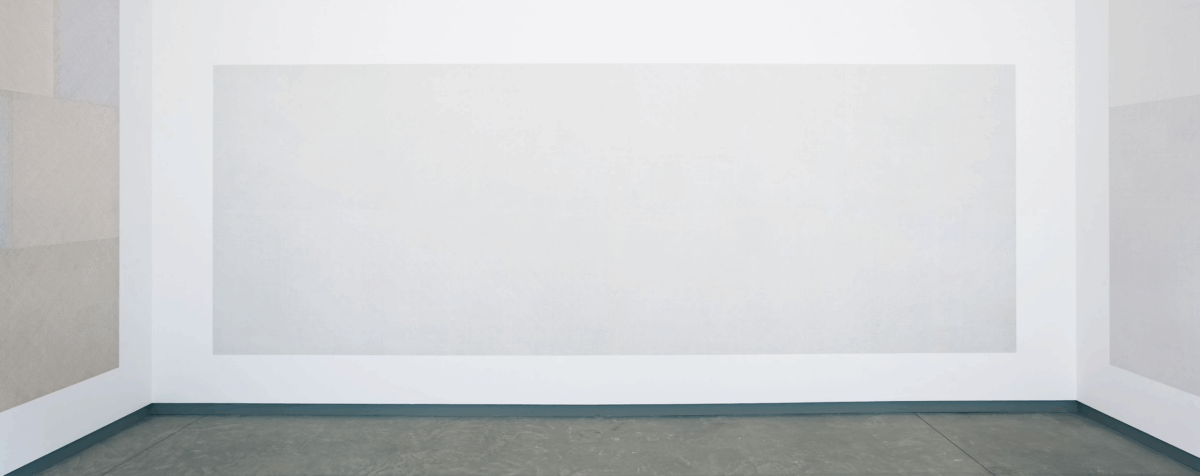
Not all artworks that utilize rule-based systems can be truly considered generative. Key to the definition of generative art is the role of automation in which the artist cedes some amount of control to an autonomous process. This relinquishing of control introduces elements of chance and randomness that allow for complexity to emerge from within even a simple rule set. For example, Josef Albers’ Homage to the Square series uses a clear rule-based system of concentric squares where the artist varies color combinations. But the work is not truly generative because the artist is still responsible for every decision, even when using a mechanical process such as screen printing, as in the Soft Edge—Hard Edge series showcased in Infinite Images. By contrast, Sol LeWitt’s wall drawing instructions, which were typically executed not by LeWitt but by assistants and installers, could be considered generative because the process of their execution is automatic and occurs independently of the artist. 

Though we tend to associate automation with computers and, increasingly, with artificial intelligence, the modern definition of automation (i.e. a process that does not require human involvement) has its roots in the Industrial Revolution. A prominent example is the Jacquard mechanized loom, first introduced in 1805. One of the first machines to be programmed, the Jacquard allowed for complex textile patterns to be generatively produced using punched cards that could store the information needed to create each pattern. This method of punch card programming was later adapted by Charles Babbage in the invention of the computer and was still in use well into the 1960s when the earliest computer artists were making their first computer-generated drawings. 

Likewise, computer artists are far from the first to employ aspects of automatism in artmaking. Many artists have turned to chance procedures and randomness as a means of bypassing the artist’s subjectivity in service of various ideological and conceptual ends — from the Dadaist engagement with the absurd to the Surrealist search for the unconscious. However, the computer offers the distinct advantage of being able to enact a precise system and randomness at the same time, striking a balance between order and chaos, chance and control. The computer’s random number generator function allows the machine to make arbitrary and unpredictable selections without subjective involvement. “Randomness is a great artist,” said Vera Molnár. “We’re constantly repeating ourselves, but randomness is always coming up with something new.”

Today’s machine learning AI tools introduce another layer of automation. Artists working with algorithmic generative processes would have to program every aspect of the work by hand—outlining all the logic and parameters that define the possibility space of the work, such as its color palette, its form, structure, motion, and other qualities. These elements could then be combined in dozens, hundreds, or thousands of different permutations to generate a potentially infinite number of variations that all correspond to a particular visual system or concept. With machine learning tools, a key difference in this process is that the programming of the algorithmic model is not done by a human author but is also automated—the machine effectively trains itself. Instead of the artist or programmer prescribing the instructions that must be carried out, the machine learning model “learns” the rules by studying training data such as images, text, video, or music. From the given data set, the model will extract and categorize patterns and relationships, then use this information to create new content based on what it has learned. The result is a generative system that still operates algorithmically and combinatorially, but often according to an inferred machine logic that, while effective, is not readily legible to its human creators. 

The level of automation we see in machine learning-based generative AI like Open AI’s ChatGPT, Anthropic’s Claude, and Google’s Gemini is far more complex and abstracted from any original “author” than the punched cards of the Jacquard loom or the rudimentary algorithmic programs of early computer artists. These generative AI tools are capable of learning, reasoning, interpreting, and generating content with far less human input or intervention than the rule-based autonomous systems that came before. Nevertheless, becoming familiar with the operations of simpler generative systems can provide a useful level of insight into the underlying processes that become obscured through these more complex higher-order models. These tools are not magic. They are the product of human ingenuity and labor rendered as algorithms, code, silicon, and data. The text, images, video, and music they produce are not so much invented by intelligent machines as uncovered through the extraction of patterns in the data that are then combined into new arrangements. In a way, the process is not so different from the girih tiles, except that now there are trillions of puzzle pieces that can be combined rather than five.

Conclusion

The trajectory from al-Khwarizmi’s 9th-century algorithms to today’s machine learning systems reveals a continuous thread of human fascination with creating systems that can generate complexity from simplicity. Whether expressed through simple rule-based algorithms or the neural networks that power contemporary AI art, generative processes have consistently offered artists a means to transcend individual limitations and discover unexpected creative possibilities.

What unites these diverse practices across centuries is not their technology, but their shared exploration of a fundamental question: how can systematic processes extend human creativity? From Sol LeWitt’s instruction-based wall drawings to today’s AI-generated imagery, artists have repeatedly found that relinquishing control can paradoxically expand creative agency. By designing systems rather than objects and establishing rules rather than predetermined outcomes, they create frameworks for emergence—spaces where the planned and the unforeseen can coexist.

As we navigate an increasingly automated world, generative art offers more than just pretty pictures. It provides a lens for understanding how human intention and automation can work together productively. These artworks demonstrate that the relationship between creator and system need not be adversarial or zero-sum but can instead be collaborative and expansive. In studying how artists have historically negotiated questions of authorship, control, and emergence, we gain valuable insights into our contemporary moment—one where the ability to work meaningfully with autonomous systems may well define the future of human creativity itself.
Art Making Machines

By Ruby Thelot

I. From Production to Reproduction

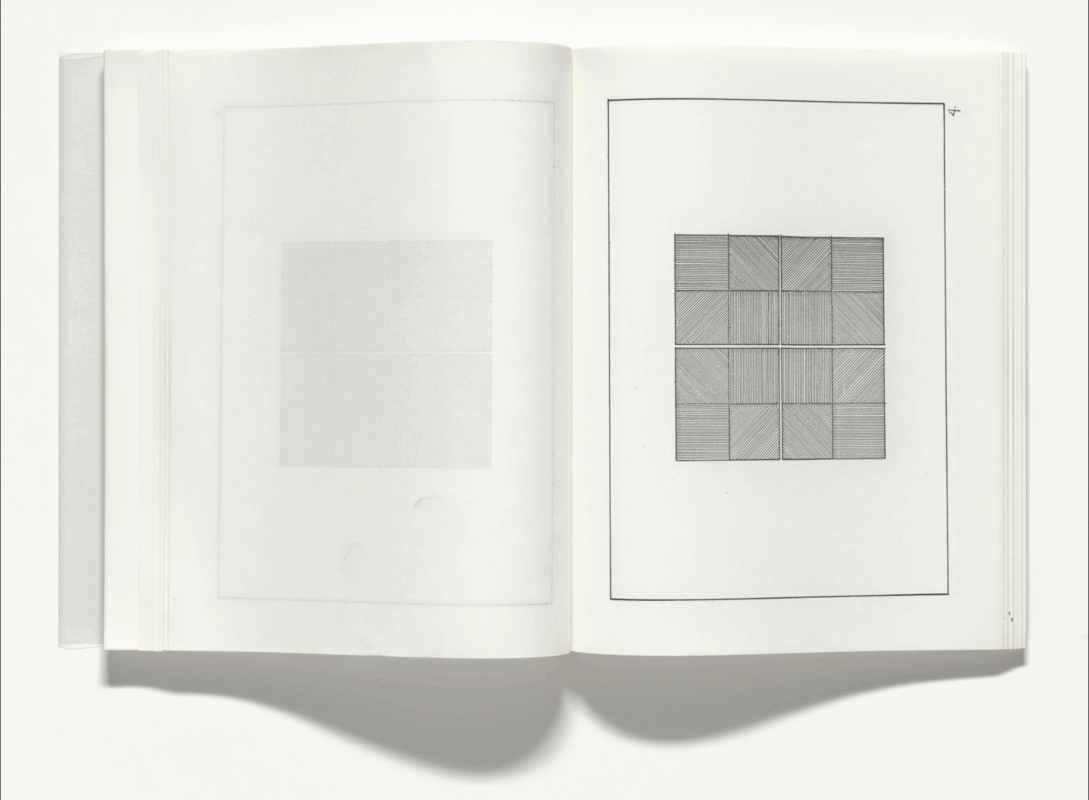
“A wall divided horizontally and vertically into four equal parts. Within each part, three of the four kinds of lines are superimposed.” 

These are the instructions given to Jerry Orter, Adrian Piper, and Sol LeWitt to execute Wall Drawing 11 at Paula Cooper Gallery in New York in 1969, by LeWitt himself. A clear list of steps—prescriptive and executable. Drawing distilled into idea. Idea existing as a set of rules. Pure concept. The role of the pre-set rules is to “[avoid] subjectivity,” LeWitt explains in his 1967 Artforum essay, “Paragraphs on Conceptual Art”. He adds that, “In conceptual art the idea or concept is the most important aspect of the work. When an artist uses a conceptual form of art, it means that all of the planning and decisions are made beforehand and the execution is a perfunctory affair. The idea becomes a machine that makes the art.”

Notably, though the idea makes the art, the hand still produces it.

In “Postmodernism or the Cultural Logic of Late Capitalism,” the literary critic and philosopher Frederic Jameson traces how late capitalism transitions from an economy of production, where one makes objects, artworks, and commodities, where the output is a product, to an economy of reproduction, where signs, images, and ideas are the ever-circulating outputs. Rules-based algorithmic art exists within this postmodernist transition, where the artist produces the idea and the machine becomes the reproducer. Although the term “machine” is used abstractly here, it represents the externalization of the production process to an entity exogenous to the mind that generated the idea. At first, that entity is the hand, acting mechanically, in the case of LeWitt, often with guides around his pencils, but soon, this entity becomes the computer. This secondary transition is best exemplified in the work of Hungarian artist Vera Molnár.

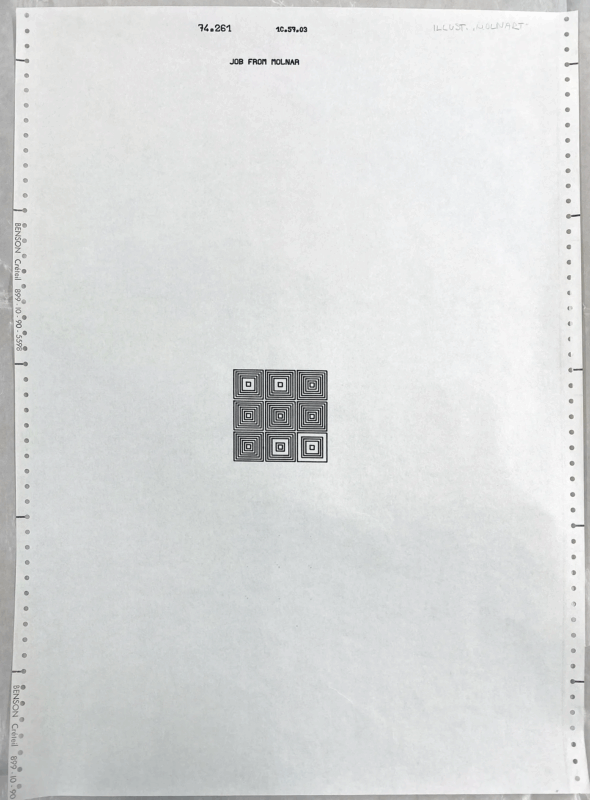
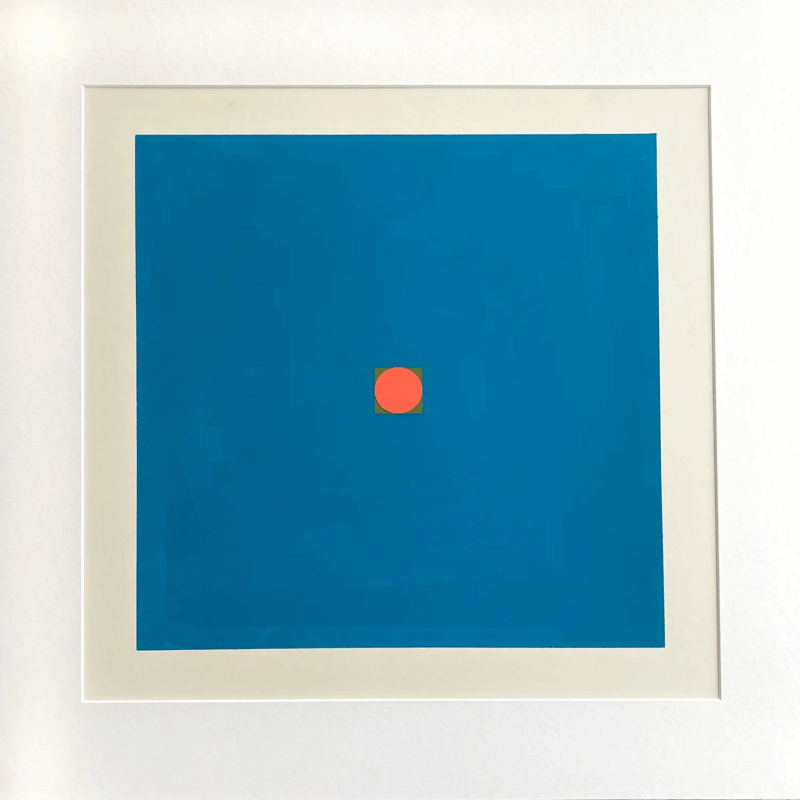
In 1959, Molnár began working with an “imaginary machine” (machine imaginaire). This abstract construction was fed simple algorithms that directed the movement and positions of shapes on the page. She then executed the algorithms by hand. We can imagine that the instruction for Icônes au Carré Rond (1965) resembled the ones from LeWitt’s Wall Drawings in form: “A square canvas, blue, in the middle, a smaller square, green, inside that square, a circle, orange.” Molnár would have to wait almost a decade to get access to a computer. Through her friendship with composer Pierre Barbaud, who introduced her to the French company Bull, she got to work with her first mainframe computer in 1968. During the 1970s, Molnár used an IBM mainframe and a plotter with which she produced a series in honor of her friend. Hommage à Barbaud (otherwise known as (Des)Ordres) is a group of works experimenting with compositions of concentric squares that follow similar algorithms to the ones she fed her imaginary machine.

Notably, though the idea still makes the art, now the computer produces it.

Though LeWitt claimed that “Conceptual art doesn’t have much to do with mathematics,” he seems to omit that the rules he set out to create, his so-called concept, are perfectly legible to machines—that computers work through similar rule-sets that guide their actions in programs—because his works have a mathematical bent. A. Michael Noll, a Bell Labs engineer and one of the first computer artists, wrote in his essay “Computers and the Visual Arts” that “The computer is extremely adept at constructing purely mathematical pictures.” When works are mathematically described, they become legible to computers—reproducible, executable. Consequently, they leave production entirely. The artist now prescribes what will happen. These computer-legible prescriptions afford reproducibility to the works.

Reproduction splits into two main techniques: replication and execution. 

Replication belongs to the world of mechanical duplication with the Xerox machine as its emblem. In replication, reproduction occurs through direct copying of a fixed original. The process is linear, automatic, and indifferent to content. Each copy carries the promise of sameness, free of degradation. 

In 1968, The Xerox Book exemplified this paradigm at the intersection of art and reproduction. Curated by Seth Siegelaub, the project involved artists such as LeWitt, Carl Andre, and Robert Morris, each contributing works specifically designed for mechanical reproduction via the Xerox copying machine. LeWitt’s contribution consisted of drawn variations generated through simple, prescribed instructions. Here, the Xerox machine literalizes LeWitt’s own conceptual premise: “the idea becomes a machine that makes the art.”

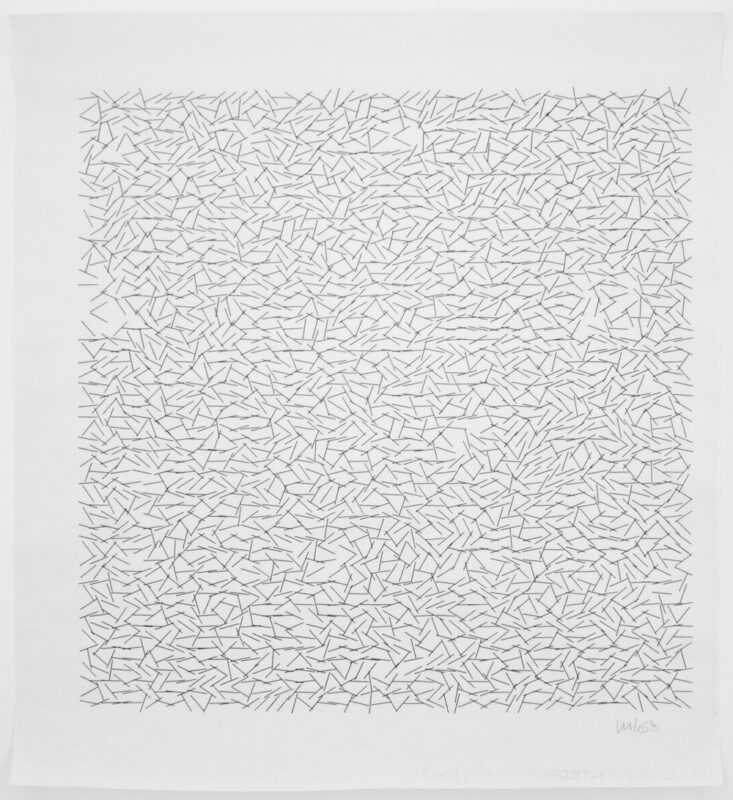
Execution, by contrast, introduces reproduction as procedural iteration. Rather than copying a finished artifact, execution reproduces through the re-performance of instructions. This is the domain of rule-based algorithmic art, in which a set of instructions — not a physical object — serves as the original. Each instantiation is technically unique but structurally identical, reflecting strict adherence to the artist’s designed logic. Vera Molnár’s Interruptions (1968), for example, uses computer algorithms to systematically generate geometric variations within tightly bounded parameters: execution becomes an act of combinatorial repetition, entirely controlled but capable of producing internal difference.

Thus, while replication (the Xerox) seeks identicality through mechanical copying, execution (algorithmic systems) permits controlled difference through rule-based procedures. In other words, execution permits the inclusion of variability and randomness.

II. From Reproduction to Variation

As rule-based execution became established, artists began to explore its latent capacity for variation. The system still obeys the author’s rule set, but those rules can now contain parameters for variation: randomized inputs and probabilistic deviations, stochastic processes that generate difference within predefined bounds.

This motion represents a conceptual softening of the algorithmic: the system no longer merely re-performs fixed instructions but becomes an instrument through which the artist courts chance. Variability becomes desirable not as error, but as an aesthetic strategy or a way of introducing dynamism while retaining authorial oversight.

A great example here is Casey REAS’s Century (2023). The series of moving works, inspired by paintings and drawings from the 20th century, operates as framed variations on a theme. Though each work is different, the execution is circumscribed to an algorithm, making each unique yet related. The works, as the viewer can tell, follow a set of clear-cut rules but still are imbued with the magic of algorithmic variability executed by REAS’s own machine.

As discussed above, Vera Molnár described her work as an “imaginary machine,” allowing for small, incremental modifications within a tightly framed logic: a square may be deformed slightly, a line can be displaced by calculated randomness—at first with dice and later with a digital random number generator. Here, the artist remains the designer of the rule-space, but randomness enters as a partner within a sandbox of known outcomes. This phase marks the threshold where algorithmic art begins to open itself to processes it does not entirely contain. Notably, now the idea and randomness make the art and the computer executes it.

III. From Variation to Generation

From algorithmic generative variation to generative artificial intelligence, we witness a transformative leap. When multiple layers of variability intertwine, the process transcends mere execution and enters the realm of creation. At its core, generation might be reducible to mathematics: vectors, gradient descent, and optimization algorithms. Contemporary generation as performed by machine learning is, in essence, the study of statistical algorithms that can learn from training data and, thereafter, generalize their learned rules onto new datasets. Importantly, in the case of neural networks, one of the more popular architectures at the moment, the algorithms attempt to apply their derived rules on the new datasets and learn from their errors or “loss,”, They improve this metric over time  by adjusting their weights across thousands of hidden layers through a process called backpropagation

Some generative art today often involves these neural networks, which are by definition self-learning and self-modifying. These systems generate work not from a fixed logic defined by the artist, but from probabilistic inference, often producing outputs that are unpredictable, even emergent.

The work of Refik Anadol, specifically Unsupervised – Machine Hallucinations (2021), is a demonstration of the breadth of neural network-powered generative systems. Anadol provides the neural network with a dataset—in this case 138,000 works in the collection of the Museum of Modern Art—and lets it draw connections that are then expressed as hypnotic, colorful murmuration on a giant screen. The moving shapes are not set by the artist but are instead the expression of the vectorial linkages between the metadata. We don’t know why they look the way they do, they just do. The system draws the connections; we observe its visualizations.

The emergent generative system evolves into something more profound: a hyperobject, an abstract monolith that gazes back at us by reflecting patterns found in its training data. Vera Molnár’s notion of the “imaginary machine” evolves here into an “imaginary monolith,” an entity that embodies the numinous, offering us a profound encounter with an Other that is both artificial and inscrutable because of its size (thousands of layers cannot be read by one person). In this opacity lies a new form of meaning. The machine, whether real or imagined, becomes an object of contemplation that transcends its mathematical origins. Working with algorithms becomes a waltz with a vast and hazy randomness that invites us into a dialogue with the unknown.

Generative art is resonant now because it is an expression of this unknown. We’re enraptured by works that feel foreign, otherworldly, not unlike the mystic painter or the sacred iconographer. Interacting with generative art becomes a brush with the undecipherable. Where we once authored rules for the machine, we now find ourselves deciphering the rules embedded within it. The locus of meaning has shifted: from prescription to discovery.

Notably, we make the idea machine which generates the art and the computer produces it.

The artist using algorithmic generation is taking slow steps, away from the machine, like a careful yet anxious bomb-maker. The vectors multiply by the thousands and the layers teem with backpropagation. Ultimately, we are looking at the transmutation of numbers into works of art, but as artist Vasily Kandinsky in his Concerning the Spiritual in Art (1912) reminds us, “The final abstract expression of every art is number.”

Towards Ekphrastic Writing for Digital Arts

Regina Harsanyi

When art historians describe visual works, they often use ekphrasis. Ekphrasis can be defined as detail-driven language meant to transport readers or listeners with great vividness to works of art they have otherwise not witnessed. In service of ekphrasis, art history includes a developed, sophisticated vocabulary for discussing traditional materials and processes. Consider how an art historian might describe Ad Reinhardt’s painting, Number 1 (1951) in the Toledo Museum of Art’s collection. The following example approximates that tradition. It is intentionally ornate, overly specific, and just self-serious enough to signal an International Art English-esque elitism:

The composition features discrete rectangular forms in blues and purples on black, establishing modular relationships across Belgian linen support. Reinhardt attenuated oil pigments with turpentine, extracting binding medium through controlled siphoning to achieve matte surface quality with velvety tactility that alters paint film behavior. Each chromatic passage maintains spectral identity while engaging geometric syntax. Blues range from saturated to atmospheric tones; purples span burgundy to violet-grays. The tessellated field creates low-reflectance surfaces eliminating specular reflection. This manipulation of rheological properties and optical characteristics generates effects through calculated subversion of conventional material substrate, transforming pictorial representation into phenomenological inquiry.


This method of description demonstrates an art historian’s command of material vocabulary: understanding how specific pigments, canvas types, and application techniques directly create aesthetic effects or inform about a moment in time. The discipline can discuss not just what is seen, but how the artist’s technical choices, from support selection to oil extraction, generate specific insight into a work of art.


Yet when confronting art with digital components, art historians and critics retreat into vague terms like “virtual” or “immaterial,” as if these works somehow float beyond physical reality. This vocabulary gap reveals the underdeveloped language in art history and criticism for digital materials despite the fact art with digital components often does not demonstrate a fundamental difference in its physicality. 

Art with digital components depends on equally precise physical processes, down to the electrons stored in microscopic capacitors, transistors switching at nanosecond intervals, and organic molecules in OLED (Organic Light-Emitting Diode) displays emitting light at specific wavelengths. This essay argues for developing a technical understanding of these very physical properties of the works and how they’re displayed, leading towards ekphrastic competence that treats bits and pixels with the same material specificity demonstrated above, bringing the same technical precision to digital media that art historians routinely apply to traditional materials.

Digital Ekphrasis


Software for digital art and design often still relies on skeuomorphism, offering “brushes,” “pencils,” and digital “canvas.” These metaphors emerged from necessity; early tools needed familiar references for users transitioning from traditional media. Yet this vocabulary obscures actual processes: mathematical functions executing across parallel processing cores, texture sampling from algorithmic noise patterns, and transparency calculations in specialized color spaces. Adobe’s “brush hardness” controls transparency values across pixel boundaries, not bristles and paint flow. Code is matter, whether raw or veiled through commodified software.

These seven short examples of technical, ekphrastic writing consider works from Infinite Images: The Art of Algorithms. Therefore, for this essay, the focus is limited to generative, algorithmic works. However, they’ll demonstrate how descriptive texts could be if art historians and critics developed a new taxonomy and understanding around digital materiality. The following examples will likely feel dense or unfamiliar to many readers; this unfamiliarity is precisely the point. Just as the Reinhardt description assumes fluency with traditional material processes, these examples assume fluency with computational processes that art criticism has yet to develop. A working taxonomy might include: processor protocols (how code runs), buffer structures (where images assemble), rendering pipelines (how pixels form), and signal domains (how data flows). A materially grounded description need not eclipse questions of virtuality or simulation; it can coexist with readings of disembodiment by showing how those very effects are in actuality produced in silicon and signal.

Operator, Human Unreadable

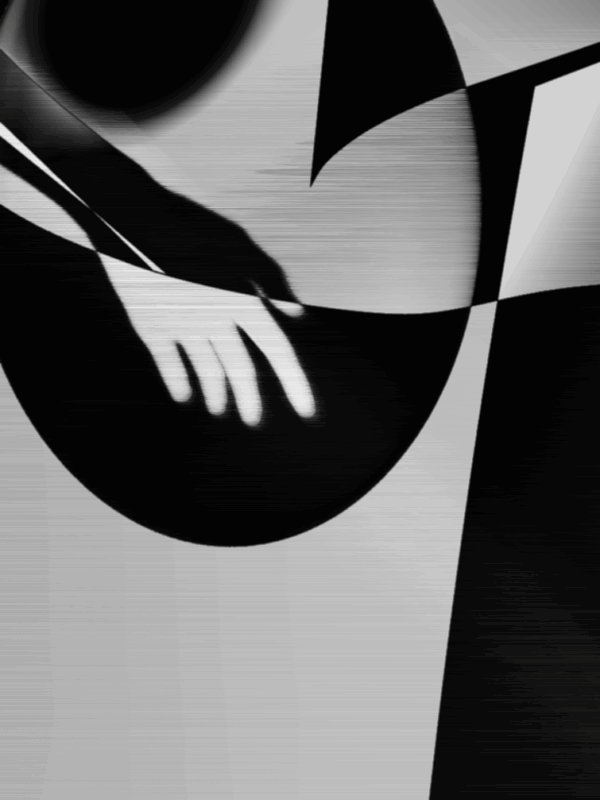
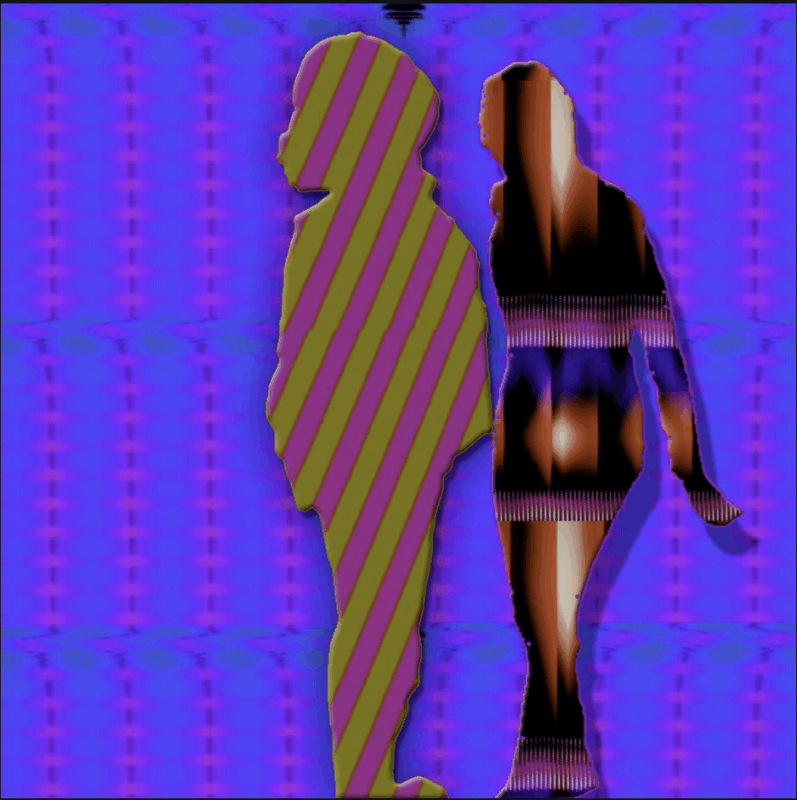
Operator (Ania Catherine and Dejha Ti) dissolves the boundary between flesh and data in Human Unreadable. Dance becomes computational material through systematic transcoding that preserves the essence of movement while hiding its human origin. Motion capture suits tracked Catherine’s gestures as streams of spatial coordinates. Each joint position was measured through optical sensors at 120 frames per second, velocity vectors calculated from positional changes and temporal relationships were stored as floating-point numbers that occupy specific memory addresses like digital fossils of corporeal motion.

Catherine’s arm extending through space generated cascades of numerical data that Operator’s custom downsampling tools converted through precise protocols, each layer stripping away human recognizability while retaining kinetic relationships. Their “hash per bone calculation” method processes individual joint data through mathematical functions, creating discrete computational signatures for each body part: shoulder, elbow, and wrist become abstract coordinates that preserve the gesture’s temporal signature but render it unreadable to human perception.

Legibility of the hash-per-bone process explains why the work feels simultaneously familiar and alien. Human movement is recognizable but with an inability to be traced back to Catherine’s specific gestures, creating the unsettling sensation of witnessing a body that exists only in computational translation.

When deployed through browsers, Human Unreadable routes these movement coordinates through WebGL graphics processing pipelines, where custom GLSL shaders transform the hashed data into vertex positions and gray-scale color values. The original dance gesture executes as parallel mathematical operations across hundreds of GPU cores simultaneously. Catherine’s physical motion becomes matrix multiplications in graphics memory, then electrical signals driving liquid crystal arrangements in display panels that emit the carefully calculated light perceived as abstract visual forms.

This computational architecture illustrates the relationship between digital palpability and the human body. Each transcoded layer: motion capture to coordinate data to mathematical hash to graphics processing to photon emission, preserves something essential about human movement while progressively abstracting it through material transformations. What emerges is dance reconstructed as an algorithmic process, creating what Operator terms “analog generative models” that produce new choreographic sequences through mathematical recombination instead of playback, suggesting that computation might be another form of embodiment rather than an absence.

Casey REAS, Century

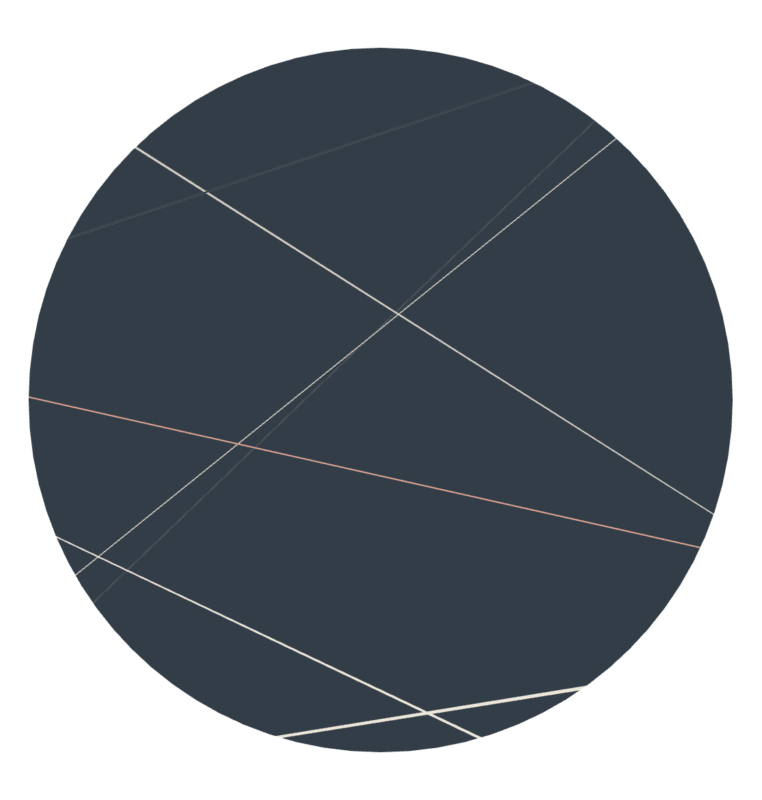
Traditional art writing might describe REAS’ Century as an “interactive, geometric abstraction” shaped by keyboard input. But this conceals how the work functions at the level of code and execution. Century opens as a circle filled with colored lines and translucent ellipses. Pressing “1” activates a deterministic slicing algorithm: segments shift and scatter across the circular frame in the same encoded sequence. Pressing “2” restores the original arrangement. The deterministic slicing algorithm may explain why pressing “1” repeatedly produces exactly the same sequence of scattered arrangements. This computational predictability creates the satisfaction of control while the mathematical precision of the scattering pattern gives the chaos an underlying sense of order.

REAS first created Century in Processing, which converts sketches into Java source and compiles them into bytecode that runs on the Java Virtual Machine with just-in-time compilation, automatic memory management, and direct access to desktop OpenGL. For the web, he rewrote the piece in the open-source library p5.js, which runs in a JavaScript engine (for example, Chrome’s V8) and issues draw calls to WebGL or the HTML5 Canvas 2D API within the browser sandbox. That translation alters how the work uses processor instructions, allocates memory, and communicates with graphics hardware.

When Century draws, it often uses an off-screen buffer, a reserved block of memory where images assemble before appearing on screen. In p5.js, that buffer is a p5.Graphics object whose pixels live in a Uint8ClampedArray, a typed array storing four 8-bit values per pixel (red, green, blue, and alpha). The slicing logic repositions regions of this array through coordinate transforms. When transforms compute non-integer positions, the browser’s rasterizer rounds to whole-pixel coordinates, producing the thin seams visible between slices.

Rendering proceeds at up to sixty frames per second in sync with the display’s refresh cycle. Each frame clears the buffer, recalculates geometry, and forwards updated pixel data through the browser’s rendering pipeline. Performance depends on CPU scheduling, garbage collection pauses, memory bandwidth availability, and the efficiency of the Canvas or WebGL subsystem. These technical constraints are active material forces. 

The choice of p5.js determines which processor instructions execute, how memory gets allocated and released, and how drawing commands queue for the graphics hardware. Century‘s visible artifacts and timing behaviors emerge directly from these computational relationships shaped by the artist’s determinations, demonstrating a way in which born-digital art operates through specific material constraints.

Emily Xie, Memories of Qilin

Memories of Qilin #713
Emily Xie, Memories of Qilin #713, 2022.

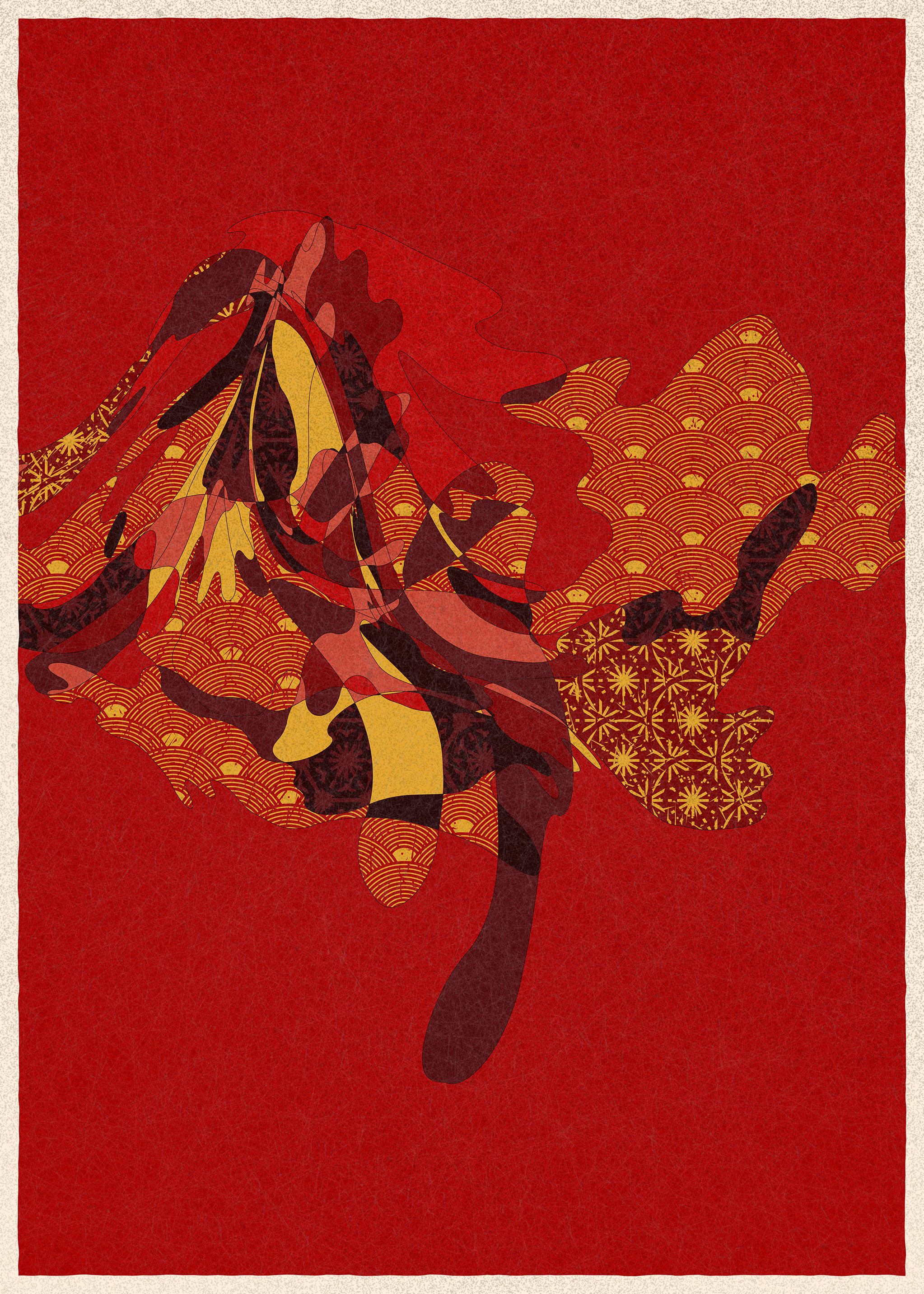
Emily Xie evokes mythological creatures from a physics simulation in Memories of Qilin, where a computational method called Verlet integration (a way of calculating how particles move and interact over time) drives connected points toward balance while keeping them in constant, subtle motion. The work starts with position coordinates for nodes that push and pull on neighboring points through springs, creating mathematical relationships that seek stability without ever quite achieving it. These calculations run in p5.js, where Xie adjusts numerical parameters until particle clusters form and shift in patterns that feel organic without depicting anything specific. The spring force calculations explain why the textile patterns seem to stretch and contract like actual fabric, knowing that mathematical tension drives the visual deformation makes the digital textures feel materially convincing rather than simply mapped onto abstract shapes.

Xie layers scanned textures from her personal archive onto the evolving particle structures through coordinate transformation, a process that maps image patterns onto moving forms by translating their positions mathematically. Each placement follows computational rules while carrying visual associations from inherited traditions. The qilin, a mythological beast, is not depicted formally but as an organizing principle for how forms appear and fade. In Chinese mythology, this creature materializes when the world becomes ready for change, embodying the space between recognition and mystery. The algorithm works similarly, generating moments of almost-familiarity that shift before they settle into fixed meaning.

The system mimics traditional textile work through computation. As the spring forces work through their directional tensions, node clusters stretch and contract in ways that suggest movement, growth. What appears as deep red or ink black comes from RGB (red, green, blue) color values calculated through algorithmic blending; the computer mixing colors mathematically rather than through pigment, yet somehow producing the same visual resonance as traditional palettes rooted in cultural memory.

When browsers run the work, JavaScript engines send calculations to graphics processing units where hundreds of specialized cores update position coordinates and force relationships simultaneously. Each frame rebuilds the entire particle system from basic mathematical principles, storing no predetermined sequence, only computational potential that unfolds in real time. This process creates something that feels alive and unpredictable, qualities usually associated with traditional media, achieved instead through rigorous mathematical procedure.

Memories of Qilin uses controlled mathematical variability to prevent exact repetition while maintaining internal consistency. The physics simulation generates interpretive ambiguity through computational precision, proving that algorithmic systems can produce the same sense of mystery that traditional artists achieve through deliberate suggestion. The images viewers encounter are artifacts of systems actively generating new possibilities rather than displaying pre-determined images, showing how cultural memory might flow through computational emergence as effectively as through the traditional stories that first imagined creatures like the qilin.

These three works, Century, Human Unreadable, and Memories of Qilin, share a technological foundation that discloses the material conditions of born-digital art, even (and especially) where it is commonly assumed to be immaterial. Each was created through Art Blocks, a platform that deploys generative scripts to the Ethereum blockchain. When a collector mints one of these works, their interaction with the interface triggers a sequence of physical operations distributed across thousands of machines.

A pseudorandom seed is generated from block-level data, computed by validator hardware through billions of transistor-level switches embedded in silicon. These operations are carried out across a globally distributed network of computers that manage and transform electrical charge using processors, memory, and storage systems. In the case of Art Blocks, minting does not retrieve a finished image or stored file. It initiates the conditions under which the artwork comes into being. The script is written and deployed to the Ethereum blockchain in advance, but the output is resolved only when a collector initiates the transaction. At that moment, the network assigns a numerical “seed value” based on factors such as block height, timestamp, and sender address. This value is passed into the artwork’s codebase, which uses it to determine the work’s formal structure. Each output exists as the result of this event; an interaction between code, protocol, and machine-level computation. 

And the Ethereum network itself does not persist in the abstract. It is sustained by machines: validator clients running execution and consensus software, solid-state drives storing historical chain data, and operators tasked with ensuring uptime and version compatibility. Persistent storage of each artist’s code depends on an ongoing choreography of software updates, hardware maintenance, power availability, and network reliability. 

To describe these works accurately is to speak about entropy generation, instruction execution, memory access, and real-time rendering. They are mechanisms through which the artwork exists, not technical footnotes.

William Mapan, Distance

William Mapan traces how visual information travels between different material forms in Distance, showing that the same image can exist as computational math, paint chemistry, and optical data while maintaining visual continuity despite material transformation. His practice involves creating compositions through JavaScript algorithms, translating them to gouache paintings, then converting painted textures back into algorithmic parameters, a process that reveals how information persists through radically different material states.

When Mapan generates colors using HSV calculations in JavaScript (mathematical operations that organize numerical values to specify hue, saturation, and value/brightness), he then recreates these same colors by measuring and mixing gouache paint using only primary colors. Both processes require precise material manipulation: his code arranges numerical data to define color relationships, while his paint mixing arranges cadmium red, ultramarine blue, and cadmium yellow in exact proportions to achieve identical visual results. The gouache’s gum arabic binder and pigment particles create molecular structures that scatter light at specific wavelengths, just as his algorithms create data structures that define the same wavelength specifications through mathematical relationships.

Notable insights emerge when Mapan photographs these painted surfaces and feeds the captured textures back into new algorithmic parameters. Digital camera sensors convert the molecular light-scattering behavior of dried paint into electrical charges, transforming one material arrangement back into another while preserving visual characteristics that allow the cycle to continue. This feedback loop reveals that Distance functions as a demonstration that information can move fluidly between material arrangements: mathematical, chemical, and optical, each maintaining enough structural integrity to inform the next transformation. This material cycle may illuminate why the algorithmic and painted elements feel visually continuous rather than like digital simulation of traditional media. The technical translation process preserves enough visual information that the boundaries between computational and tangible pigment become genuinely unclear. 

Each painted patch represents information that has traveled through multiple material states: mathematical calculations stored as electrical charges, then pigment molecules arranged by brush movement, then photons scattered by paint texture, then electrons generated in camera sensors, finally becoming compressed data patterns written to digital storage. Understanding this material journey reveals how Distance demonstrates that digital and traditional media share the fundamental capacity to carry and transform information through matter, suggesting that our appreciation of computational art depends on recognizing these material continuities rather than treating digital processes as somehow separate from physical reality.

LoVid, Hugs on Tape 

For Hugs on Tape, LoVid processes personal recordings of embraces collected during the SARS-CoV-2 pandemic through a system that translates digital image sequences into analog signal interference. Videos recorded on smartphones are decoded into continuous electrical voltages, where each pixel’s luminance level determines waveform amplitude and frequency. These signals are routed into custom-built video synthesizers composed of analogue circuits that modulate incoming voltages in real time. The synthesizers introduce chromatic complexity through waveform interference, feedback routing, and phase offsetting, altering the underlying signal before any frame-based encoding reoccurs.

The visual result is shaped by the structure of the body in the original footage. The electrical properties of the image: brightness gradients, edge intensities, and spatial distributions,  condition how synthesizer circuits alter the signal. The presence of the body acts as a modulator, defining where interference patterns condense or disperse. Color is produced through voltage-based modulation, not applied after the fact. The artist’s hands move across the synthesizer, patching cables, turning knobs, adjusting voltage in flowing motions; a dance between hand and machine. The image responds to each gesture, shifting and bending with every turn and every deliberate touch. The body is indexed by density and movement rather than outline or contour.

After analog processing, the signal is re-digitized through video capture hardware and imported into editing software. In Adobe Premiere and After Effects, LoVid applies operations such as tiling, mirroring, and temporal repetition. These manipulations recompose the already-transformed footage, extending analog interference into new spatial arrangements. The artists painstakingly draw the silhouettes of each body by hand in Photoshop, creating the frame-by-frame stop-motion animation. These animated elements are then composited with the video patterns to create the final work. Each layer of the process preserves material constraints introduced by the previous one. The editing environment does not overwrite the analog signature but recombines it through digital array manipulation.

The work demonstrates how signal passes through computational and electrical systems without being abstracted from material conditions. LoVid’s video synthesizers operate as voltage processors that introduce form through circuit behavior rather than software logic. The final image accumulates its properties through sequential transformations, each of which imposes its own limitations and affordances. LoVid’s system traces the pathway of an image across incompatible signal domains, allowing each format transition to leave a visible imprint on the result.


0xDEAFBEEF, Glitchbox

Series #4 - Glitchbox - Token #171
0xDEAFBEEF, Series #4 – Glitchbox – Token #171, 2021/2025.

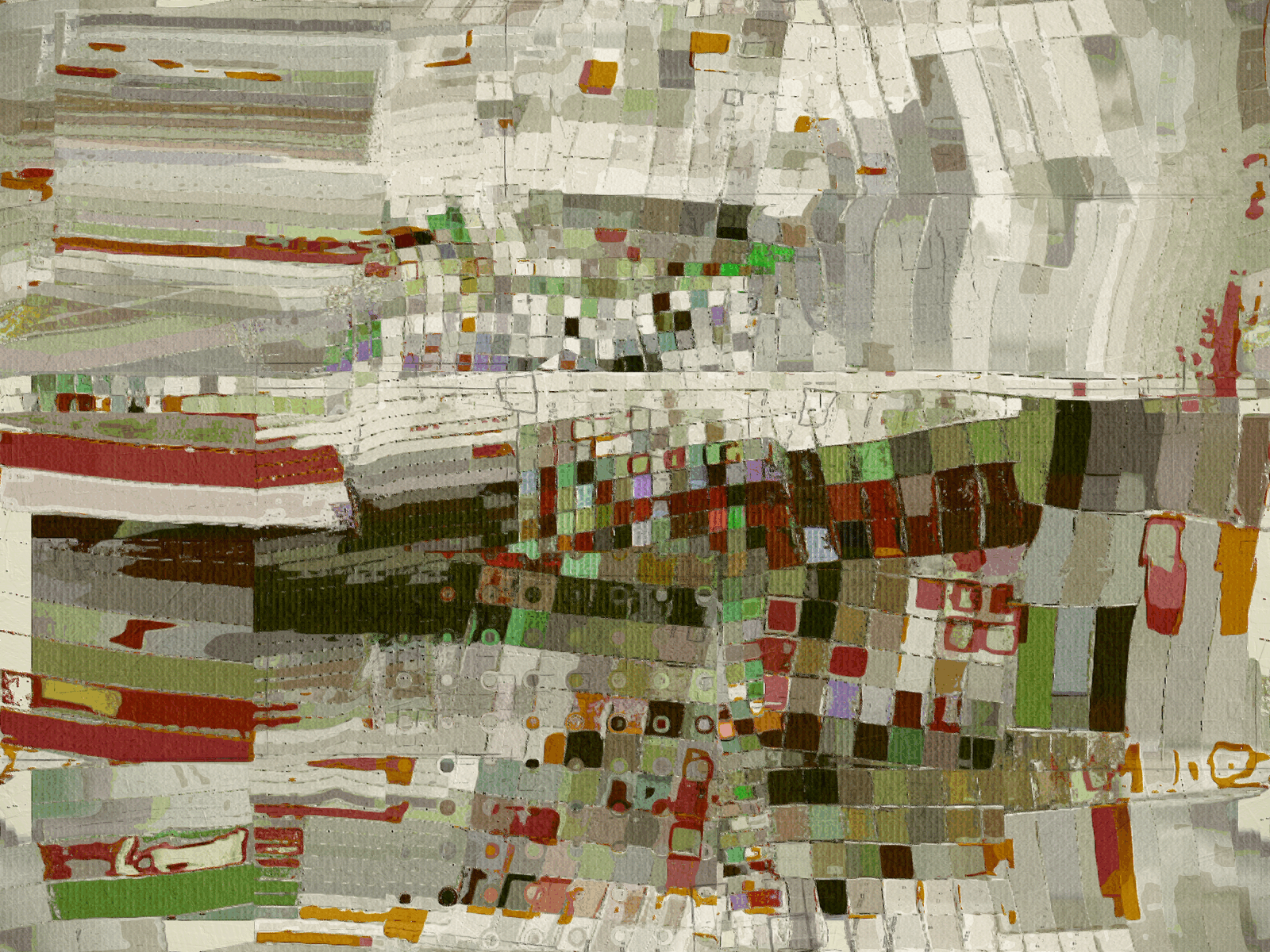
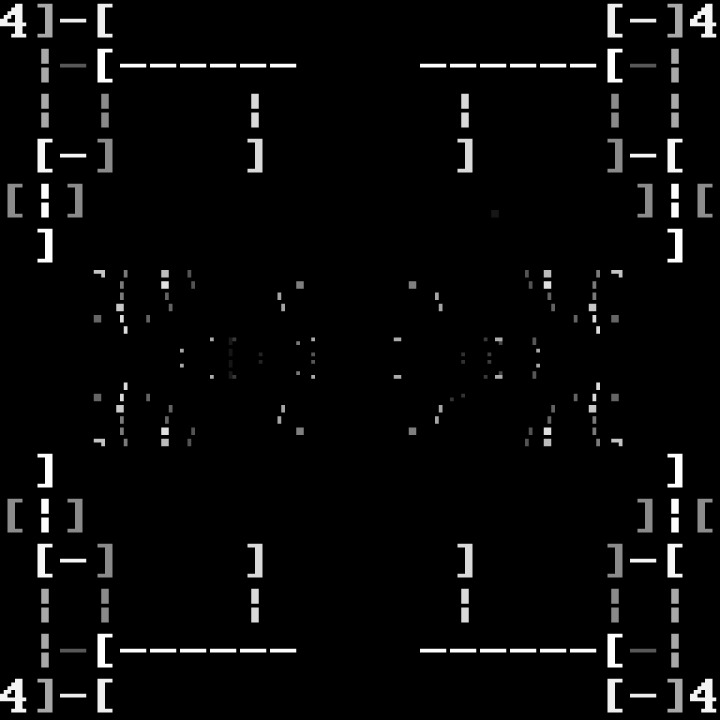
0xDEAFBEEF’s Glitchbox reveals the material conditions of its own production: processor time, memory layout, and system throughput. Written deliberately by hand in C and compiled into WebAssembly, the program runs as a compact executable that carries no assets and relies on no external libraries. All audio and image are generated during runtime.

Sound is produced one sample at a time through arithmetic operations that calculate pitch, amplitude, and modulation shape. Each value is computed in the moment and passed directly to the output buffer. The sound is not retrieved, stored, or replayed. It exists only while being processed.

The image is rendered from a 192px grid. Each pixel holds a single 8-bit grayscale value. Excluding color channels reduces the size of the memory buffer, allowing the frame to be updated quickly enough to remain synchronized with the audio. The low resolution matches what can be recomputed and passed to the display at the necessary rate. Each redraw erases the previous frame and replaces it with a new one, constructed entirely from recalculated values.

The system is closed and recursive. Each cycle executes the same operations on a new set of inputs. There is no media archive. No part of the output is retained beyond its frame or sample. The viewer experiences the system sustaining itself through continuous computation under constraint. The flicker rate, waveform character, and overall form of the piece reflect limits imposed by available memory, processor speed, and the timing of execution. The real-time generation explains why Glitchbox feels immediate and present rather than like watching a recording, knowing that each frame is calculated in the moment makes the flickering feel like witnessing computation thinking.

Parameters exposed to the viewer modify internal variables. Each change produces a new output using the same logic. When saved, only the parameters are recorded. The version is regenerated by re-executing the program with those values.

The form of Glitchbox emerges from timing loops, data structures, and allocation limits. Each decision, such as pixel format, audio sample rate, or redraw frequency, reflects a very physical tradeoff between complexity and speed. The image shows what can be drawn fast enough. The sound shows what can be computed without delay. Every element that appears is the result of conscious constraints being met.

Zach Lieberman, Color Blinds Study

Color Blinds Study #22
Zach Lieberman, Color Blinds Study #22, 2023.

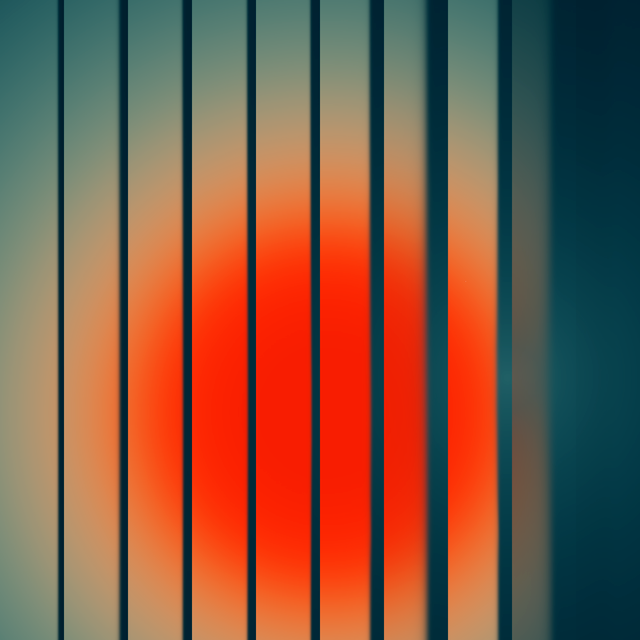
In Lieberman’s Color Blinds Study, color pulses through a scaffolding of stripes that stretch across the screen, folding and expanding like blinds. At one moment, the palette hovers in dusty lilacs and peach-grays, striated into clean horizontal bands. Seconds later, the bands have thickened and deformed. Within them, blotches of blue, yellow, and red bloom from within, held in suspension by soft curvature. Then, as if responding to a pressure not seen, the entire composition tilts its chromatic axis, fading toward night tones and spectral noise.

Lieberman authored the work in openFrameworks, a C++ toolkit that provides direct access to OpenGL graphics processing. The motion emerges from time-based parameter calculations that modify stripe positions, color values, and geometric transforms across rendering cycles. Each frame recalculates the entire composition from mathematical functions rather than playing back stored animation data. The system generates color through algorithmic blending operations and applies procedural noise to create textural variation within precise geometric constraints.

The work runs as compiled executable code that sends drawing commands directly to the graphics processing unit. Vector calculations determine stripe positioning, while fragment shaders handle color interpolation and blending operations. The continuous visual changes result from clock-time driving mathematical functions that modulate amplitude, frequency, and phase relationships. No predetermined sequence exists. Each frame represents the current state of ongoing calculations.

When compressed into its h.264 format, the computational process transforms into encoded video data. The real-time mathematical generation becomes fixed pixel arrays stored as compressed blocks with temporal prediction algorithms. Frame rates lock to encoding specifications rather than computational timing. Color values shift from live calculation to decoded approximations filtered through compression artifacts.

The images captured from the piece betray its behavior. No single frame suffices. Each still freezes one phase of a gradient that only makes sense in transit. A muted band with a sudden peak of blue in its center, a smear of red sliding toward brown, or a ring of peach brightening into lemon before sinking again. The work lives in their succession and the specificity of digital chrominance.

Color Blinds Study demonstrates how openFrameworks’ direct hardware access enables real-time geometric recalculation that produces the work’s characteristic temporal unpredictability. The stripe-based visual system depends on floating-point arithmetic units continuously computing positional offsets and color interpolations, creating chromatic transitions that cannot be predetermined or exactly repeated. When the work transforms from live computation to encoded video, this mathematical variability freezes into fixed pixel sequences, revealing how the same visual forms can emerge from fundamentally different material processes: real-time calculation versus data playback. The work’s aesthetic depends on this computational timing, showing how C++ execution speed and graphics pipeline efficiency directly shape the rhythm and intensity of color changes that define the viewing experience.

Conclusion

These examples reveal that computational art operates through the same material reality as any work in the Toledo Museum of Art’s collection. A new material epistemology for computation must be considered. Digital artworks are not immaterial. They are produced through voltage shifts, instruction execution, memory allocation, and signal modulation across physical substrates. Computation takes place in matter. Its outputs are structured by processor behavior, timing architectures, and display technologies that operate within defined physical constraints.

Critical engagement with digital art requires a shared taxonomy built around these systems. Rendering logic, buffer states, procedural structures, and data formats shape what becomes visible or audible. They constitute the material basis of the work. Adopting this approach will require new education models for curators, critics, and journalists alike, along with a spirit of collaboration between art historians and technologists.

To write ekphrastically about art with digital components is to describe these systems with precision. It means treating computation as a physical process and recognizing code, hardware, and signal as materials. Formal analysis must account for how the work comes into being through execution, timing, and transformation within machine environments.

Building this vocabulary allows media artworks to be seen in terms equal to strictly traditional artforms. The surface appearance of a computational work reflects physical systems operating in real time. Describing those systems is central to meaningful arts writing.